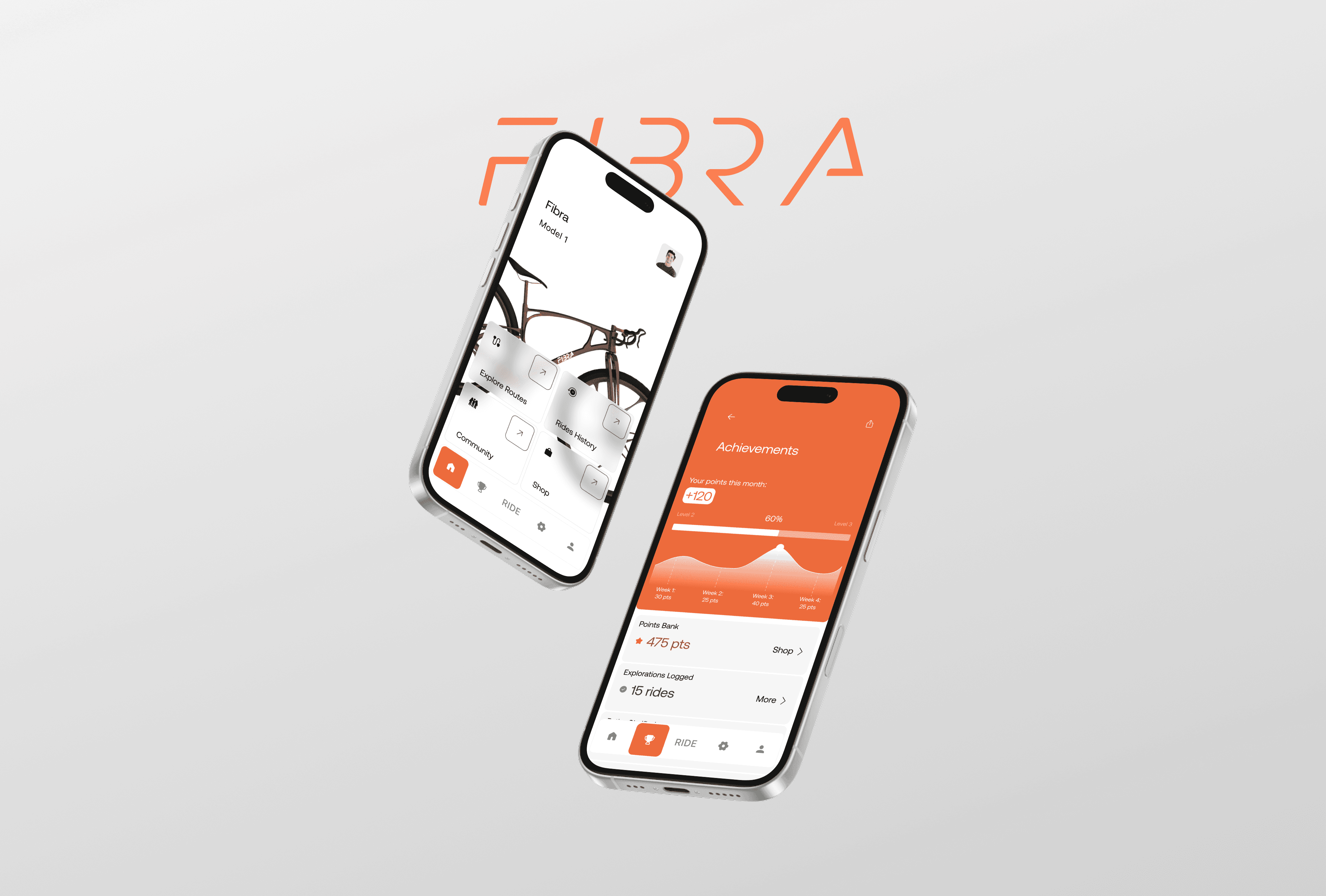
Fibra App – Supporting Long-Term Cycling Habits
Fibra is a mobile companion app created for non-professional cyclists who want to integrate outdoor riding into their regular routines. This project explored how product guidance, expectation awareness, and structured ride planning can make outdoor cycling feel more approachable and repeatable over time.
Platform
Mobile App
Role
Product Designer
Team
Individual
Duration
10 weeks
Problem
Preparation effort and uncertainty about route demands prevent riders from maintaining consistent cycling habits
Outcomes
Delivered and tested an end-to-end interactive prototype, validating the product narrative
EARLY RESEARCH
I began by exploring why non-professional riders struggle to spend consistent time outdoors despite clearly understanding its benefits. This phase combined secondary research, surveys, interviews, and competitive review to identify where motivation breaks down before action. I established five core dimensions to frame the research around to better understand the user behavior and reasoning.
Perceived readiness
Commitment sensitivity
Decision clarity
Preparation effort
Continuation signals
88%
Want safety or guidance when outdoors
93%
Associate outdoor activity with stress relief and well-being
“I know biking outside would be good for me, but staying home is easier. Even a short ride feels like something I have to push myself to prepare for.”
Alex, Freelance Designer
“Riding outdoors looks enjoyable, but I worry about terrain, weather, and whether I’m prepared enough. If things feel uncertain, I’d rather skip the ride.”
Nino, Beginner Cyclist
COMPETITIVE LANDSCAPE
To understand how outdoor activity is currently supported, I analyzed platforms focused on planning and tracking participation. Strava and AllTrails clarified the landscape: strong support for performance and navigation, but limited support for readiness before starting.

Outdoor navigation app for discovering and planning trail routes
Clear route discovery, rich environmental detail, confidence in navigation
Focused on planning, not on helping users feel ready to begin
Support readiness before planning begins

Performance tracking platform for cycling, and fitness activity
Real-time tracking, visible progress, motivation through metrics
Engagement begins after the decision to ride is already made
Reduce friction before the first ride
DESIGN PRINCIPLES
Bringing together the research findings the gap between wanting to go outside and actually starting I synthesized into three core design principles for Fibra.
Understand readiness before starting
Start riding without friction
Support ongoing outdoor use
SITE MAP
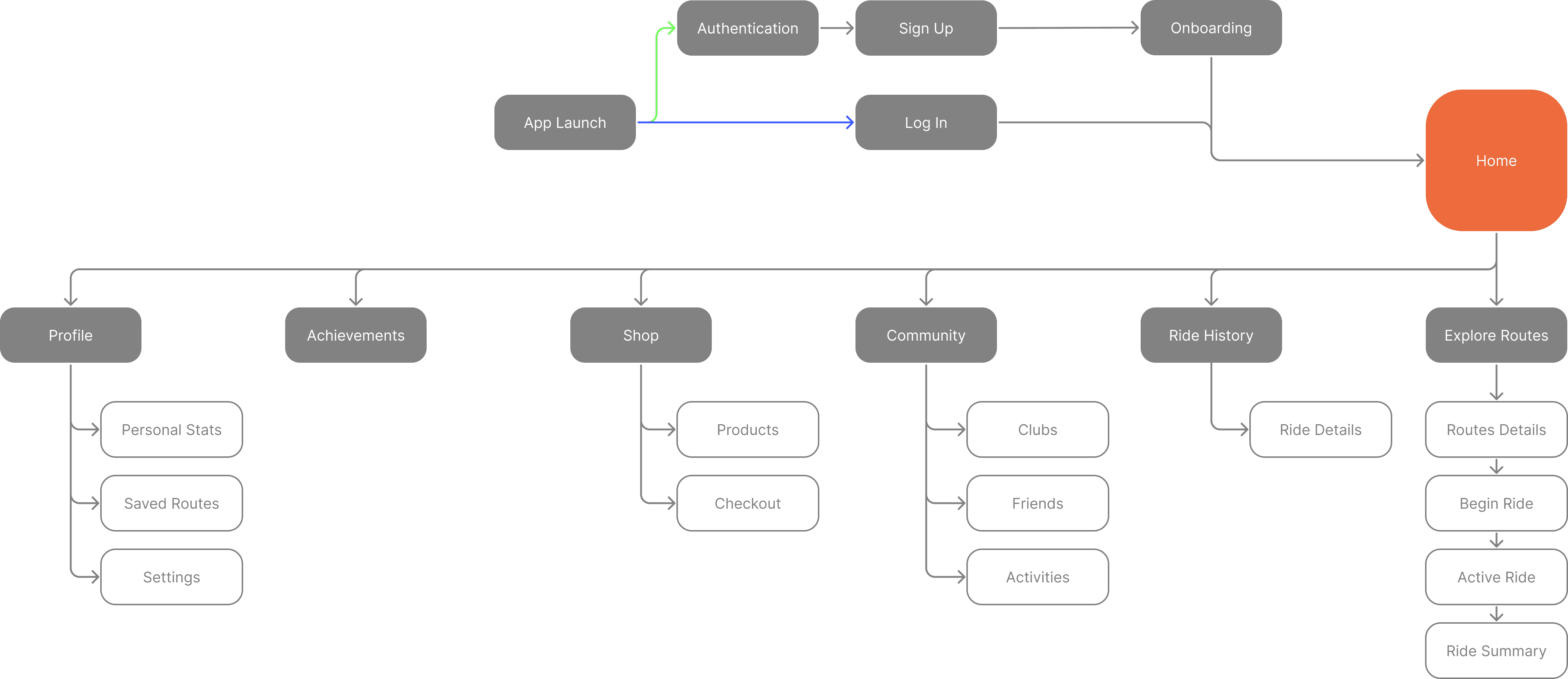
Fibra is designed as a bike companion app that supports the ride before, during, and after it happens. I translated the design principles into a sitemap centered on selecting a route, beginning a ride, and sustaining engagement through history, community, and progress.
USER FLOW
This task flow isolates the decision point between exploring a route and beginning a ride. Because hesitation occurs before the activity starts, I focused on supporting decision-making at the “Route Details” stage.
A “Save for Later” path reflects real behavior, allowing riders to pause without losing context and return easily. Together, these paths create a repeatable loop that builds confidence for further use.

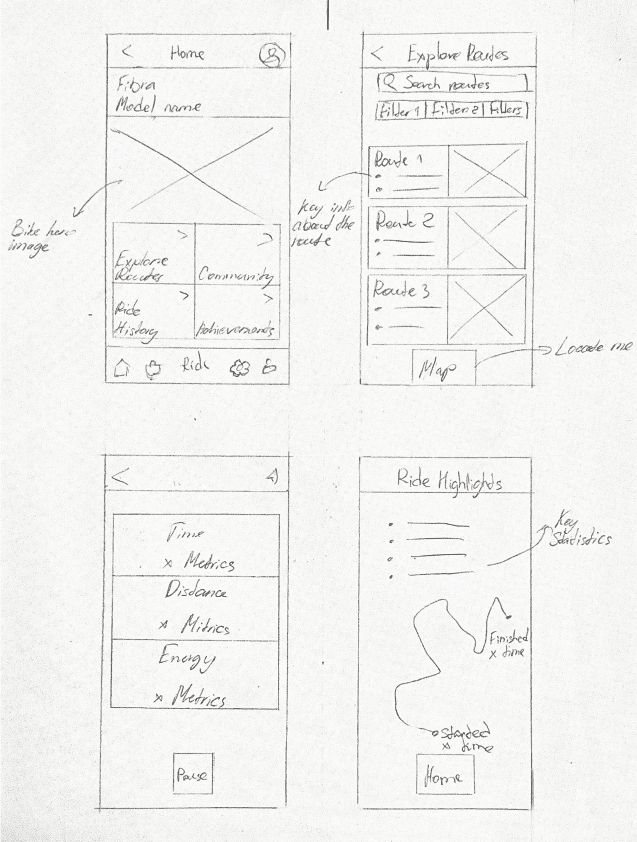
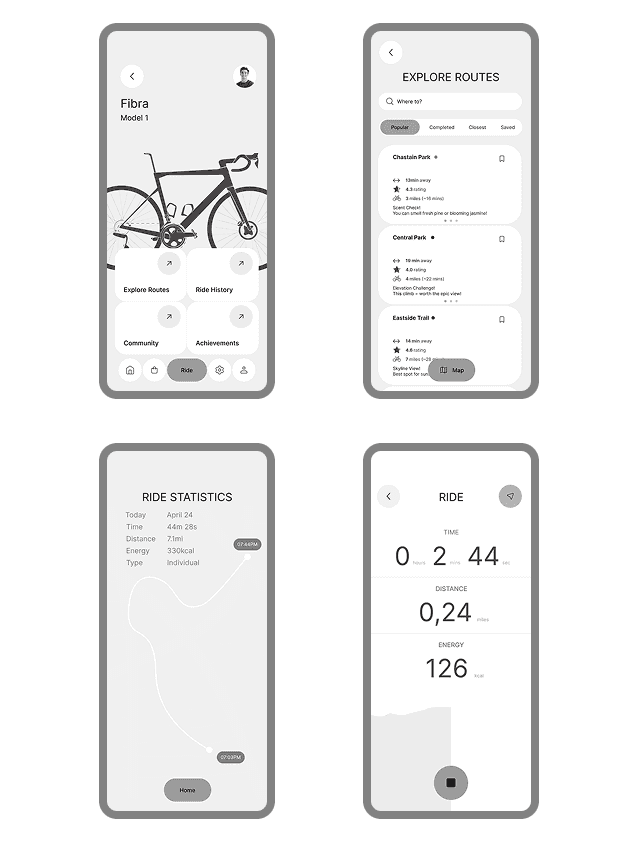
WIREFRAMES
PRODUCTION DESIGN & EXECUTION
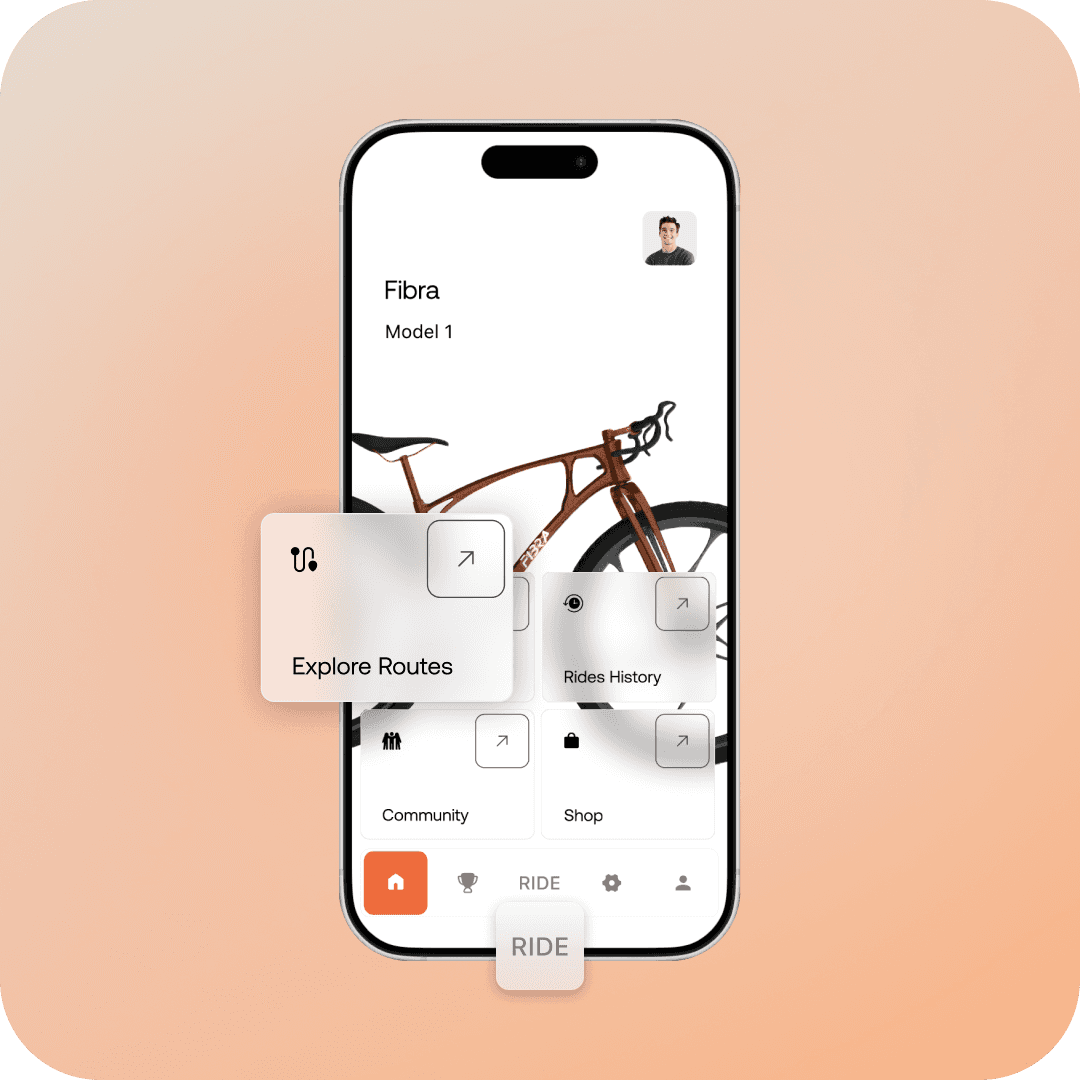
Home: Freedom to begin riding without friction
The experience reduces decisions at the start to support consistent riding
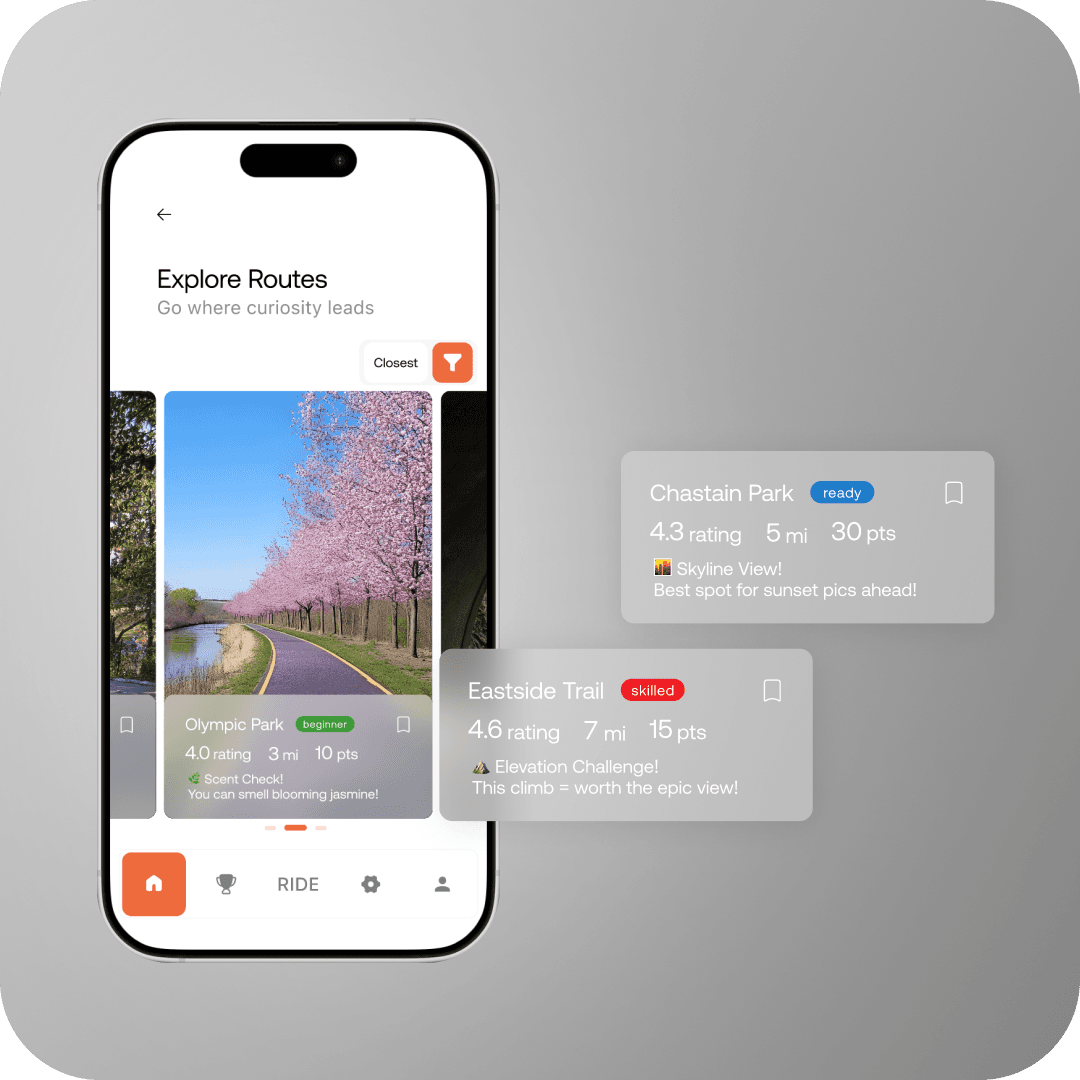
Clear route expectations
The experience reduces decisions at the start to support consistent riding
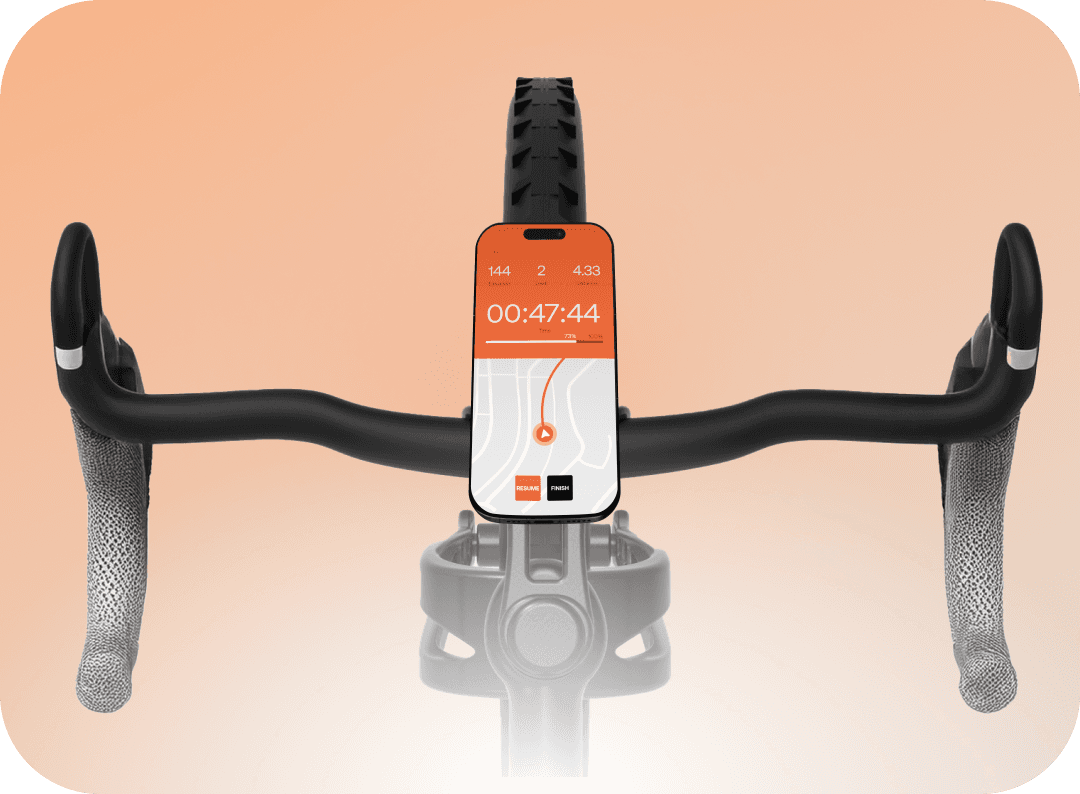
Straightforward guidance during the ride
Essential metrics stay visible so riders can stay focused on the road
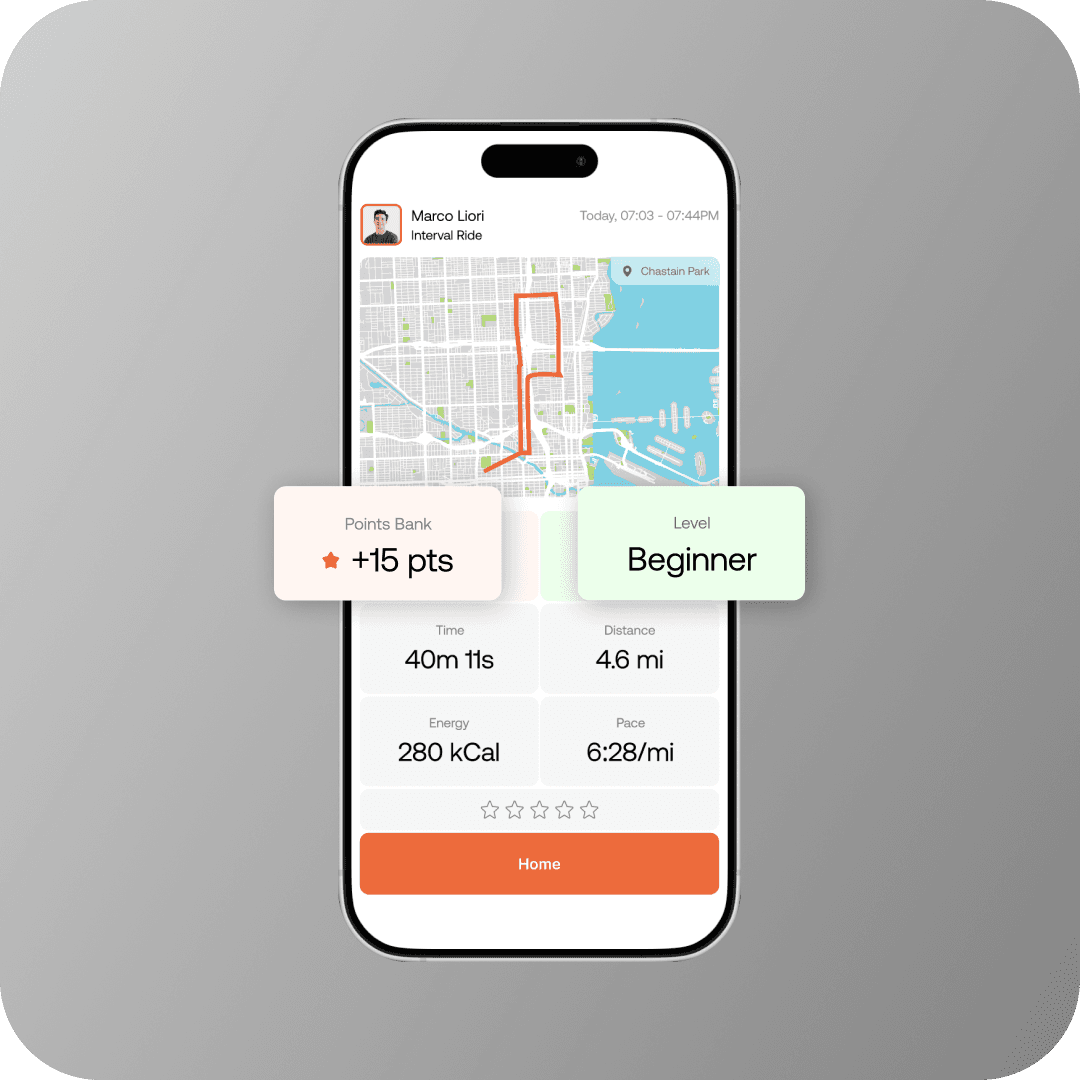
Progress that supports continued riding
Visible results and points create motivation to return
OUTCOMES
After refining the high-fidelity interface and implementing the core ride flow, I validated the experience through usability testing with eight participants across different skill levels. The results showed that simplifying preparation enabled independent ride initiation and successful completion of the full ride cycle.
87%
Were able to begin rides independently
80%
Correctly interpret route difficulty
75%
Expressed willingness to continue riding after completion
IMPACT
Identified a potential behavioral shift toward sustained outdoor riding, validated through usability testing of a coherent product narrative that addresses early-stage barriers through a proactive ride preparation and progress-visibility approach.
LEARNINGS
✅ Design clarity comes from real user needs I had to catch myself making assumptions and turn them into real questions. That shift helped me design from what riders actually needed, not what I thought they needed.
✅ Strong products require shared alignment The bike and the app were designed in parallel. Staying in constant conversation helped us keep one clear direction and one shared visual language across both.
⏩ If I had more time.. I would run a second round of usability testing with a larger group – both in person and remotely – to validate the experience and refine the final details.
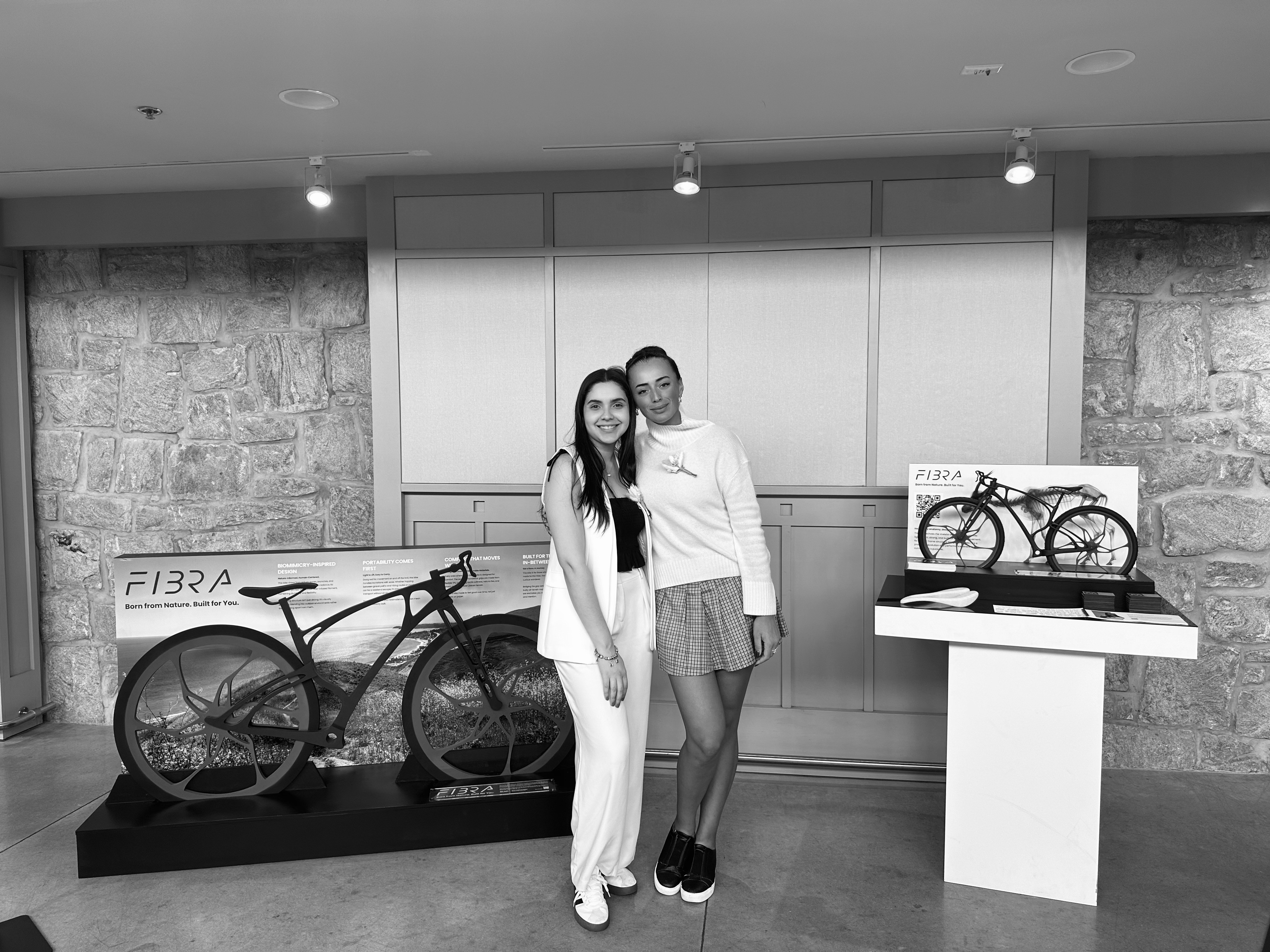
Myself with the Industrial Designer Maria Hernandez