Fibra – Helping Non-Professional Cyclists Start and Sustain Outdoor Rides
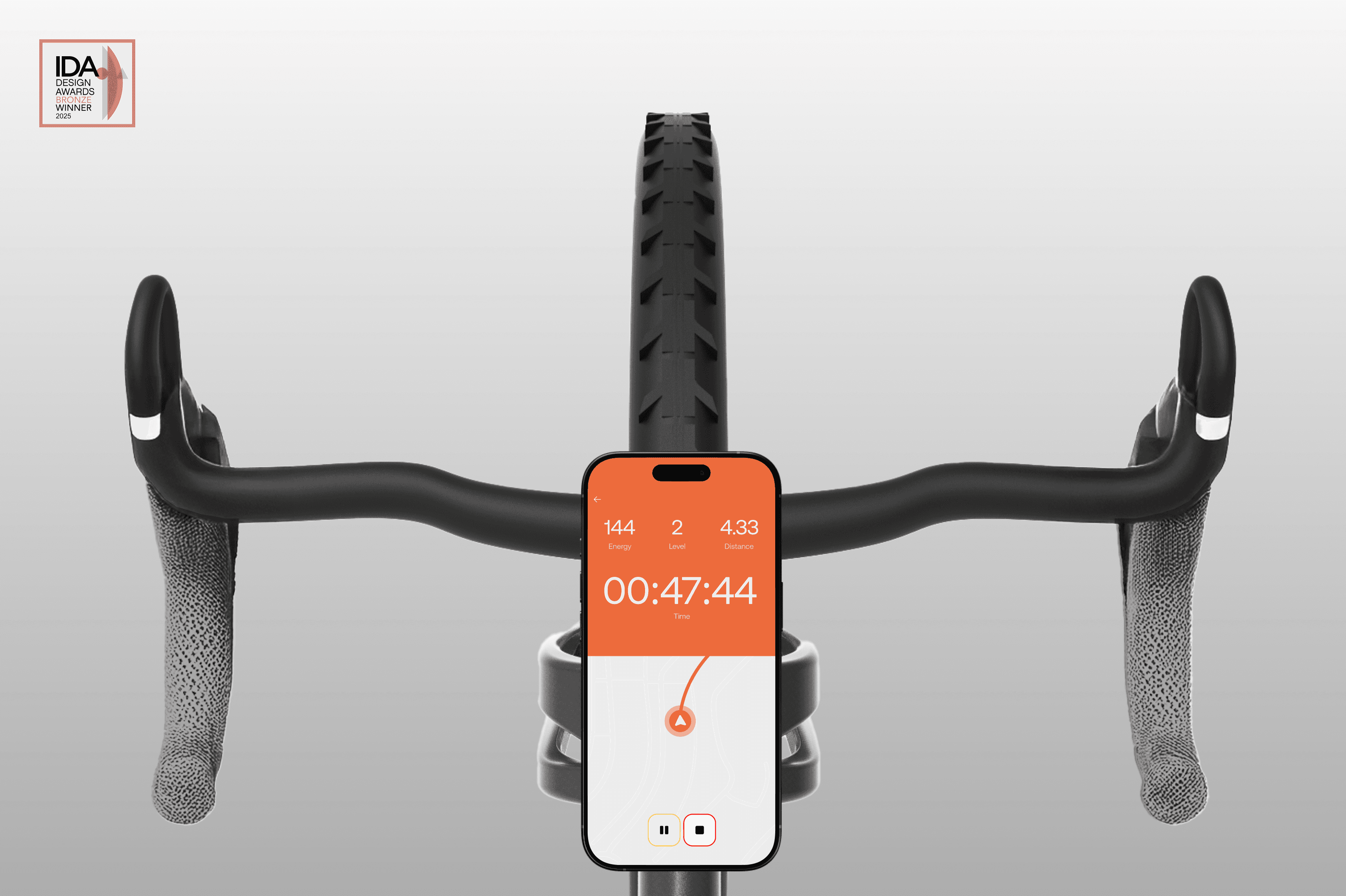
IDA Design Awards, Bronze 2025 International jury-reviewed recognition
ROLE
Product Designer
DURATION
10 Weeks
TEAM
Individual + Industrial Designer
SKILLS
CONTEXT
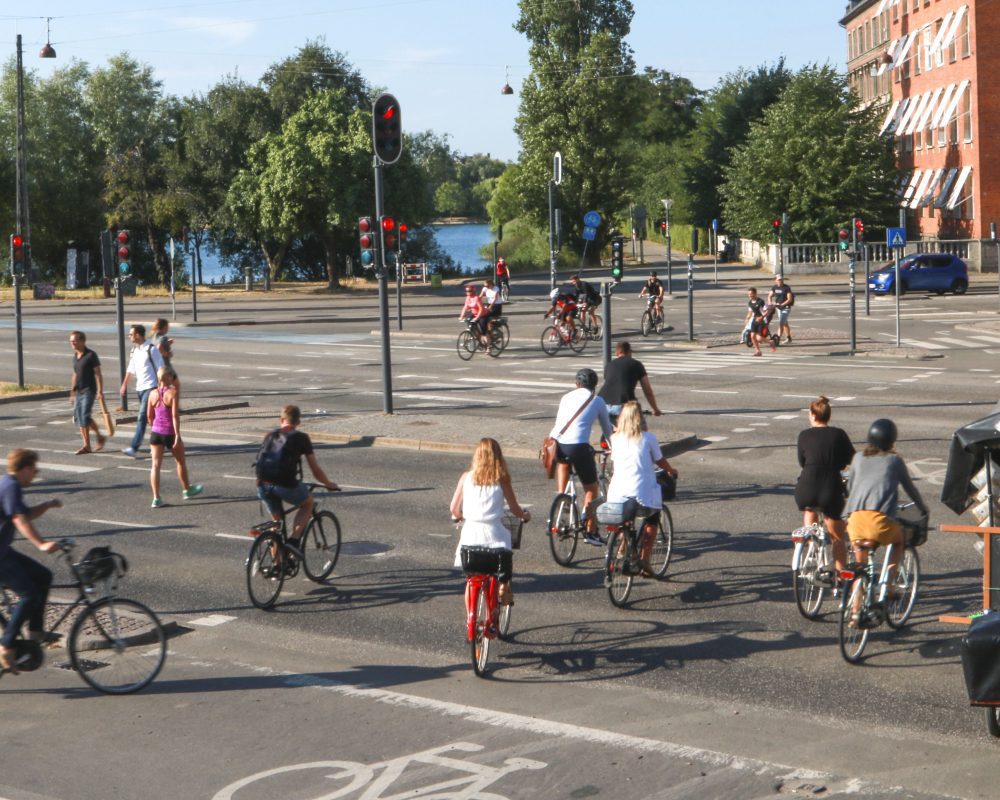
Cycling has a re-entry problem
Cycling was once how people got places. The world moved digital, the habits didn't follow. Physical inactivity now costs the US $117 billion annually. For people who never cycled or stopped years ago, getting back has no obvious starting point.

PROBLEM
The first ride is where most beginners drop off
Choosing a route, understanding the challenge, and feeling ready all happen before the ride begins.

Looking across online and in-person sources
Researching outdoor activity trends
Interviewing and surveying non and beginner riders
Analyzing Strava and similar apps
OUTCOMES
>5 sec
Users identified route difficulty correctly, up from 24%
87%
Experienced reduced friction at ride entry
75%
Increased likelihood of completing the first ride
Based on two rounds of usability testing: 11 participants at midpoint, 8 at final
SOLUTION PREVIEW
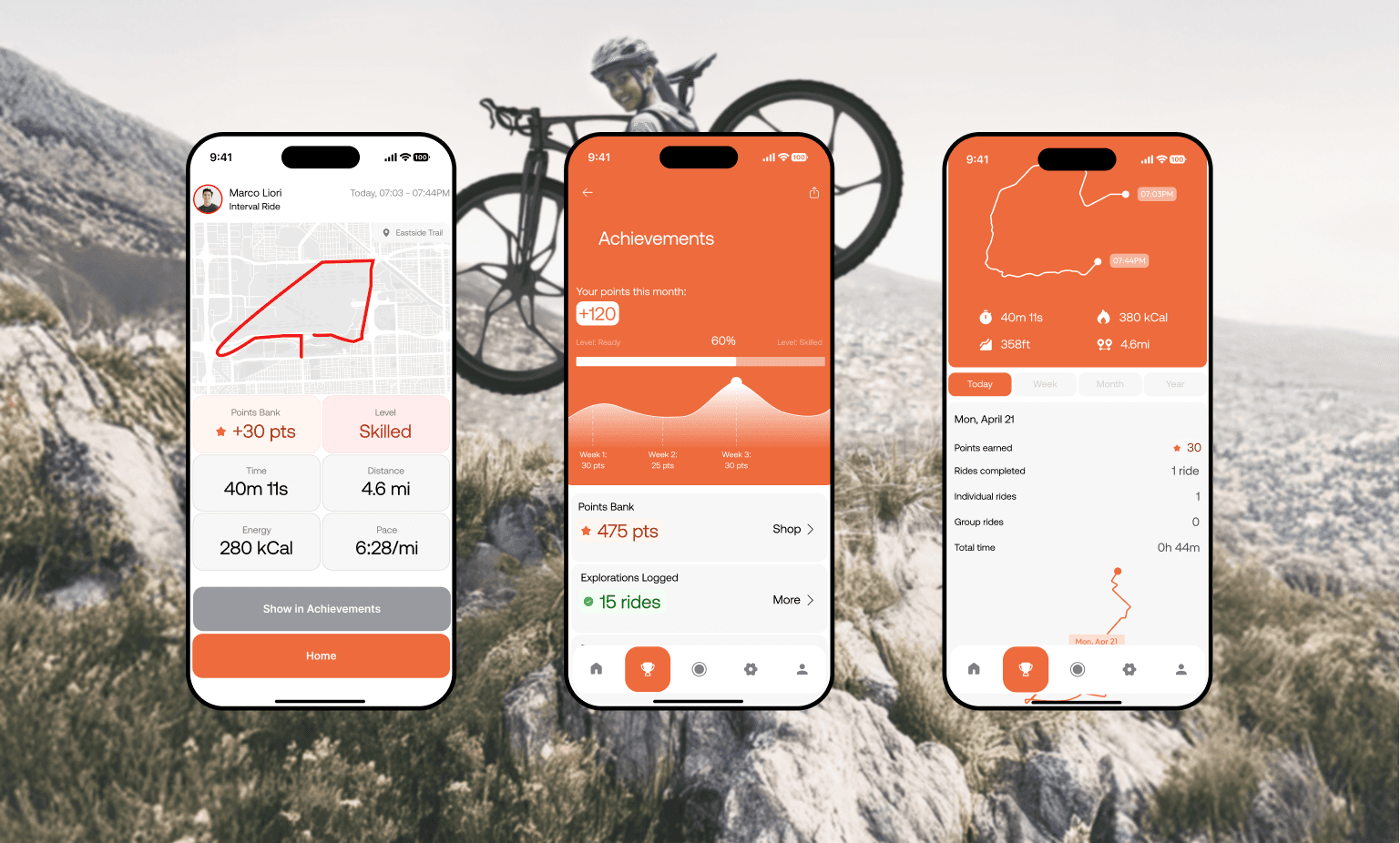
Reducing drop-off at the first ride through session clarity
RESEARCH
The market pushes performance.
Beginners need approachability
Most cycling apps are built for people who already ride. Fibra is built for people who haven't started yet.
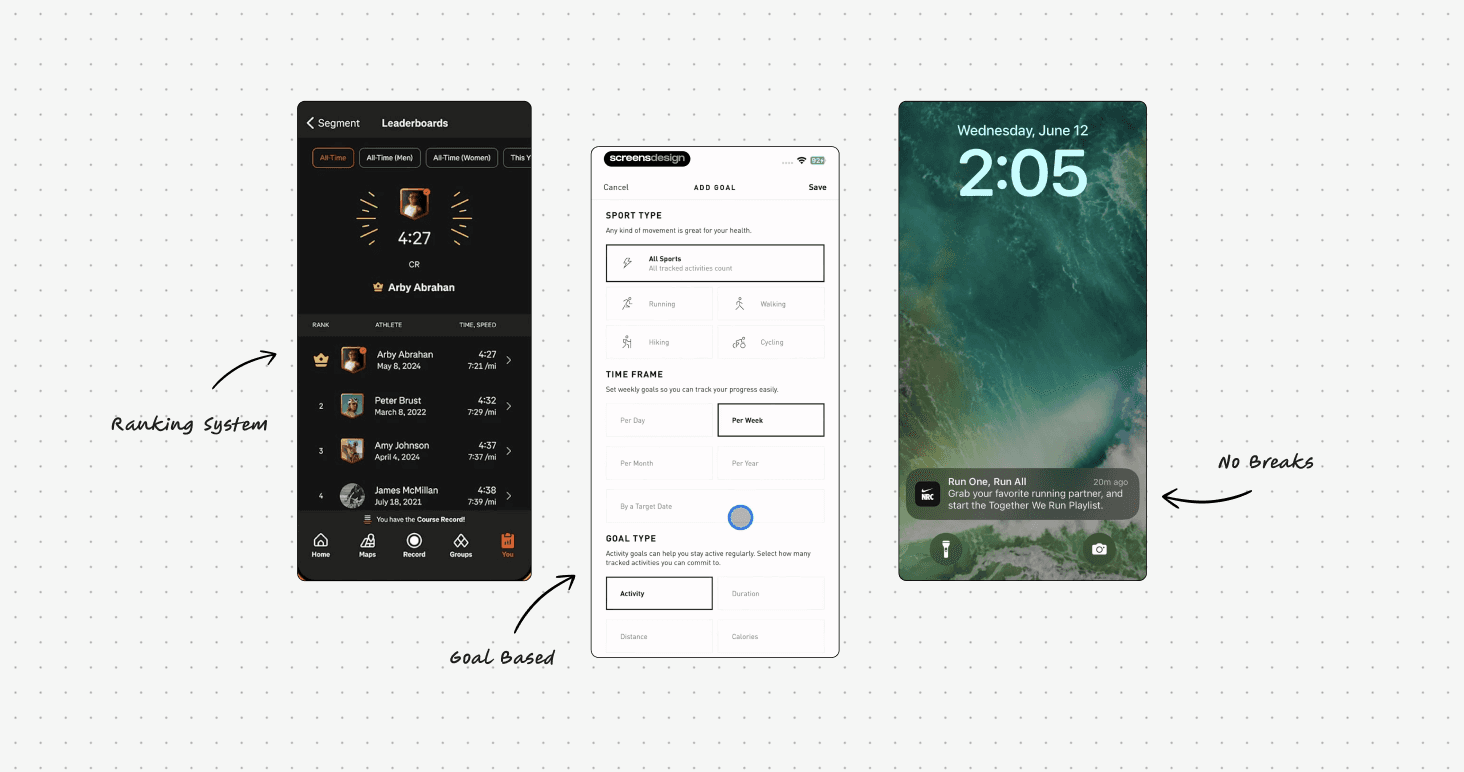
Interfaces from Strava, Nike Run Club and Adidas Running
People want to cycle.
The barrier is knowing where to start
I interviewed and surveyed beginner and non-cyclists to understand their behavior, motivations, and experience gaps.
Cyclists need clarity…
Preparation involves multiple steps
Too many small decisions before starting
Standards feel too high
Self-comparison to experienced riders
Start has to be easy…
Timing rarely aligns
Riding competes with higher priorities
Consistency feels assumed
Starting feels like committing long-term
DESIGN ITERATIONS
A pivot in direction required a pivot in design
At the mid point the industrial designer had to change the bike concept. The downhill frame design wasn't structurally viable, so the bike moved to gravel. For me it meant a new user, different behavior, and a complete shift in emotional direction.
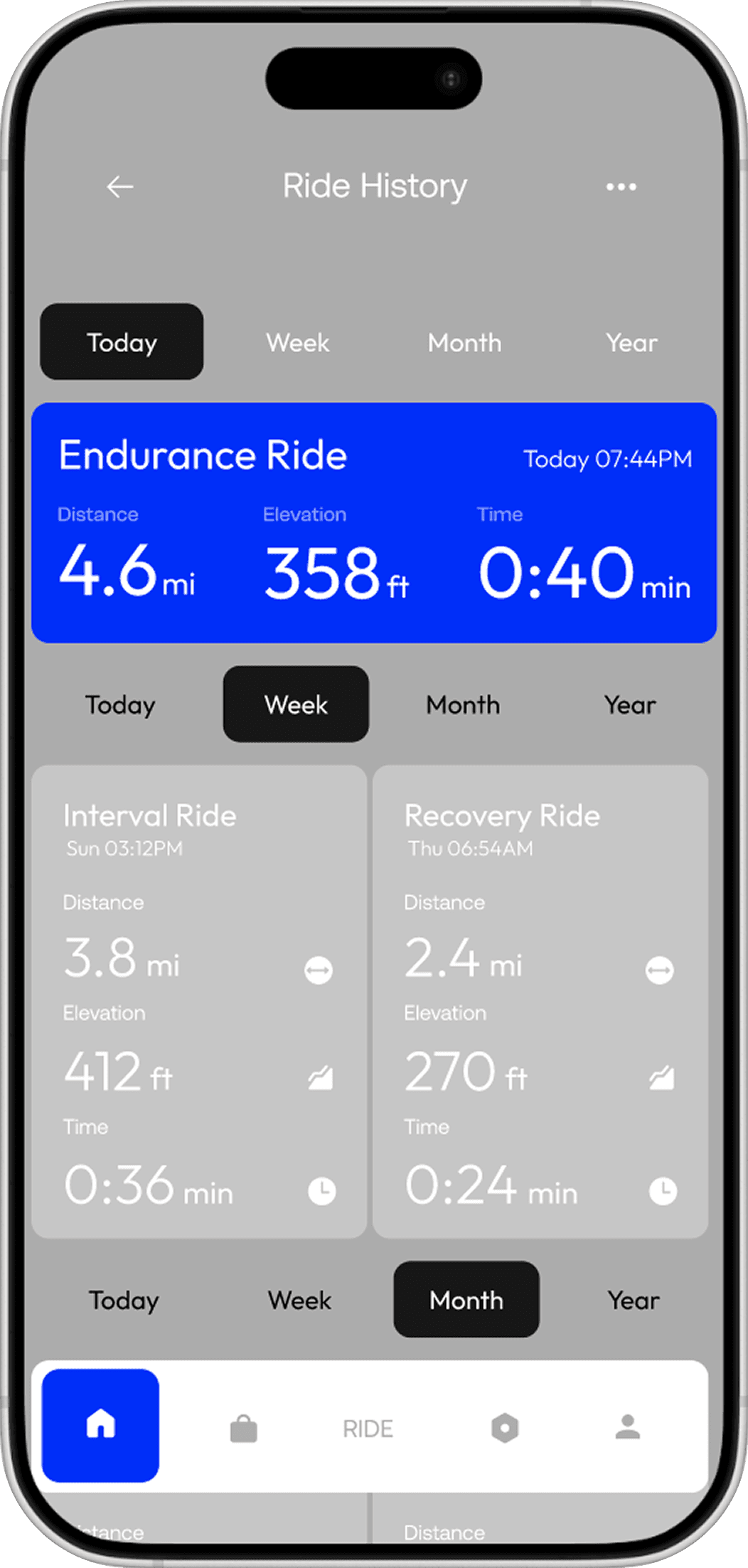
BEFORE
Performance-driven direction
Narrow audience, advanced riders, extreme conditions, adrenaline-focused
Focused on progress tracking and precise performance data for those who already know what they want
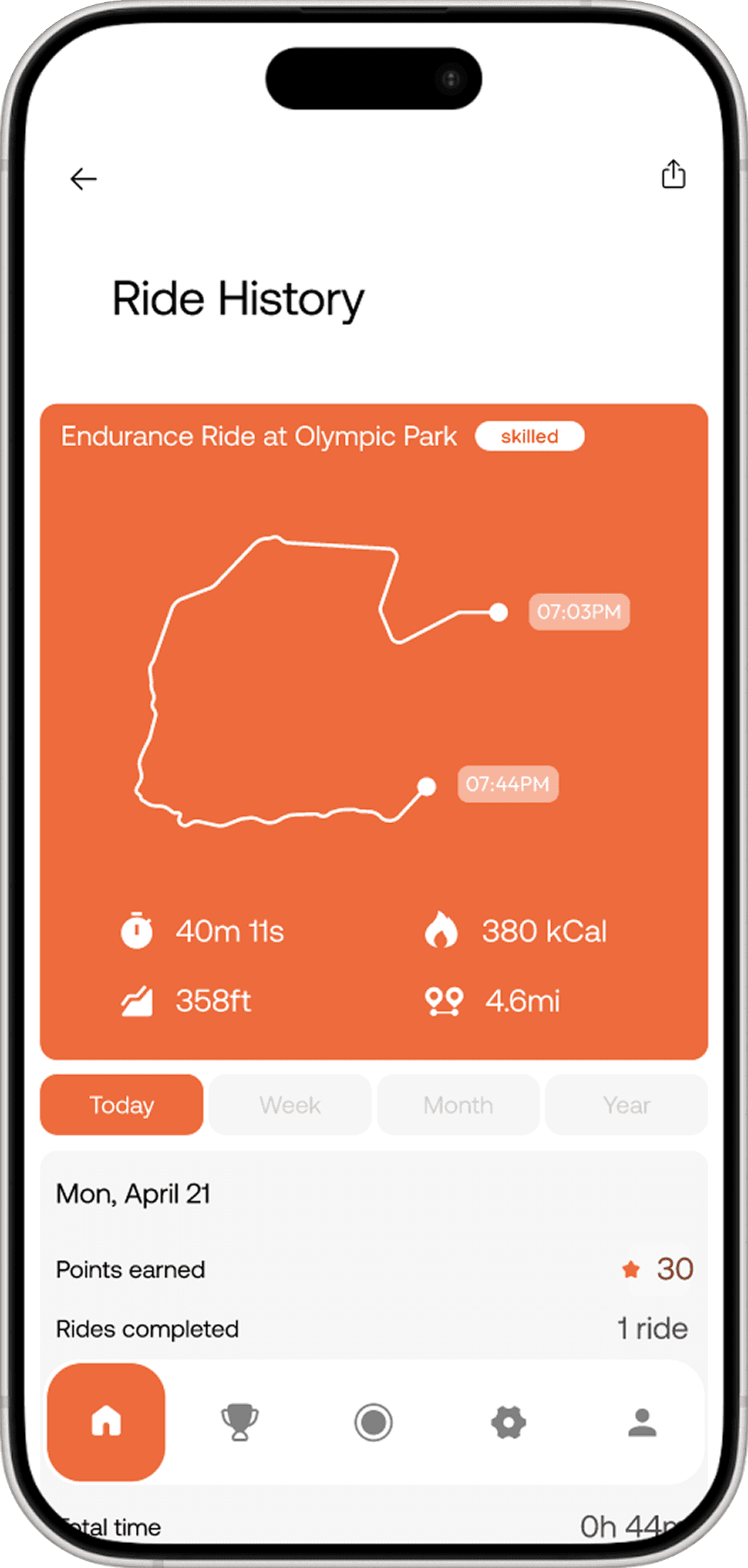
AFTER PIVOT
Approachable premium direction
Target shifted from experienced niche riders to non-cyclists and beginners
Focused on decision to start and riding consistency, removing the surrounding effort so the only thing left is the ride itself
Difficulty that anyone can understand
With the new bike direction set, I explored multiple visual directions. During testing, one decision stood out. How do you communicate 5 preparation levels to a user who has never cycled before?
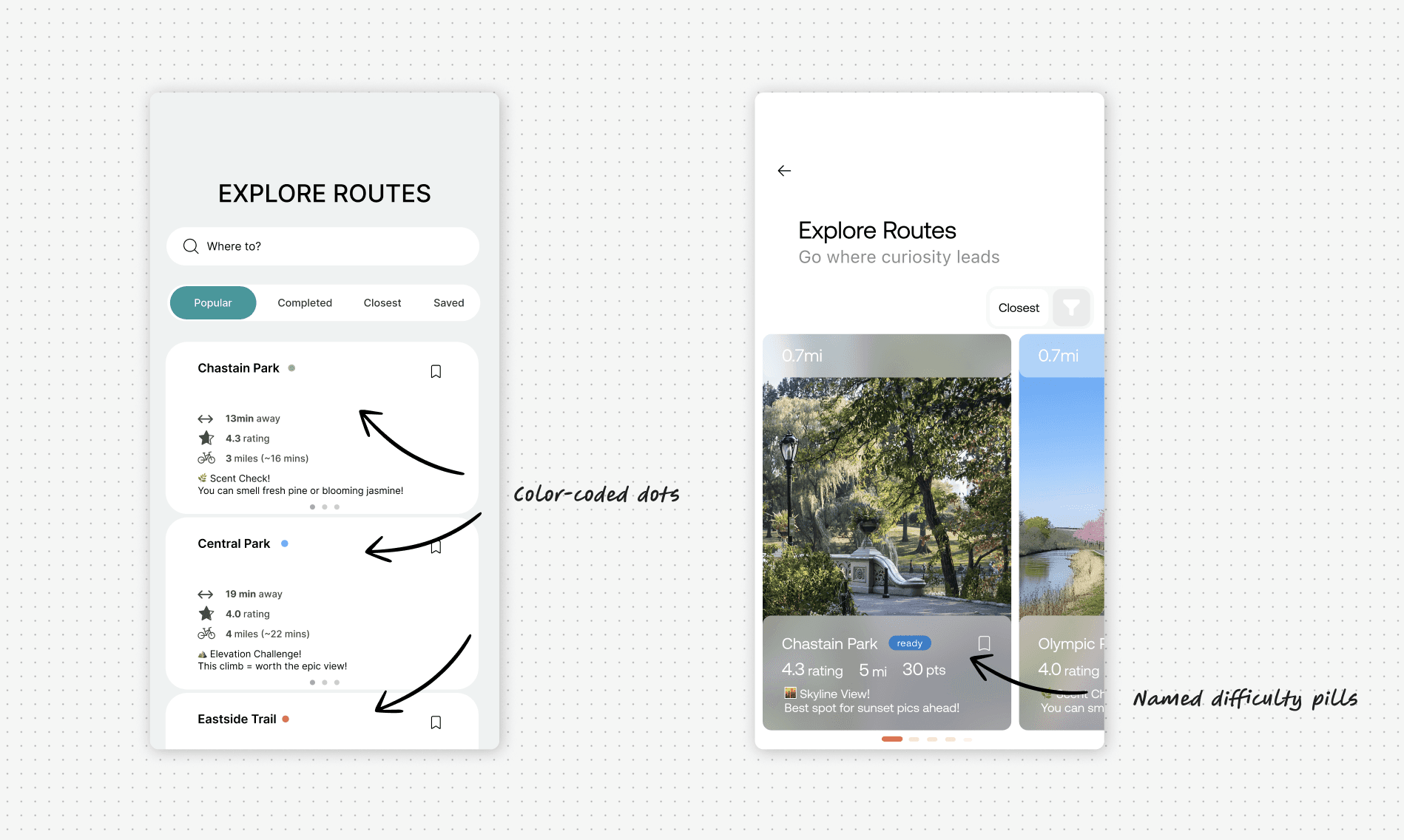
Route difficulty indicators across two versions
VERSION 1
Color-coded dots
Followed standard color psychology, green - easy, red - hard
Only 24% of 11 participants understood what the dots meant
VERSION 2
Named difficulty pills
Beginner, Ready, Skilled, Strong, Driven - read by any user
Over 80% of participants understood the levels immediately, up from 24%